
Horseshoe Blog The Definitive Guide to Equine Hoof Care, Western & European Heritage, Fashion, and Travel
Welcome to the central portal of the horseshoe BLOG curated exclusively by [suspicious link removed]. For centuries, the humble iron shoe has stood at the crossroads of human civilization. It transformed agricultural productivity, revolutionized medieval warfare, reshaped European trade routes, and eventually established itself as an enduring symbol of good fortune, sartorial elegance, and agrarian heritage.
At HOUFERS, our goal with this horseshoe editorial is to bridge the gap between rigorous equine podiatry and the vibrant cultural lifestyle surrounding horses. Whether you are an experienced equestrian practitioner managing herd hoof health, a historical scholar researching ironmongery in medieval Europe, or an adventurous traveler planning a riding trek across regional European trails, this guide serves as your authoritative resource.
1. Equine Health & Husbandry The Science of Modern Farriery & Hoof Care
The core foundation of any dedicated horseshoe BLOG must begin with anatomical care. The old adage “no hoof, no horse” remains an absolute physiological truth. Understanding the complex bio-mechanics of the equine foot is crucial for maintaining biomechanical soundness and preventing debilitating conditions such as laminitis, thrush, and navicular syndrome.
                   [ EQUINE HOOF STRUCTURAL MECHANICS ]
                                     |
       +-----------------------------+-----------------------------+
       |                                                           |
[ THE OUTER HOOF WALL ]                                     [ INTERNAL STRUCTURES ]
       |                                                           |
• Keratinized tubular barrier                               • Coffin bone (Distal phalanx)
• Absorbs impact shock loads                                 • Digital cushion & Navicular bone
• Regulates moisture transpiration                           • Sensitive laminae blood supply
Anatomical Breakdown of the Equine Foot
The equine hoof is a biological masterpiece engineered to absorb immense kinetic energy. A 1,000-pound horse galloping at top speed generates thousands of pounds of impact pressure per square inch across its feet. Key anatomical components include:
-
The Hoof Wall: A thick, keratinized structure composed of millions of microscopic tubules, growing continuously from the coronary band at approximately 6 to 10 millimeters per month.
-
The Sole: The concave bottom surface designed to protect sensitive internal structures while providing secondary load-bearing capacity.
-
The Frog: A elastic, triangular structure located at the underside of the heel. The frog acts as a natural hydraulic shock absorber and crucial circulatory pump, forcing venous blood back up the limb with every stride.
-
The Digital Cushion & Coffin Bone: Internal structures responsible for dispersing concussive forces and supporting structural alignment.
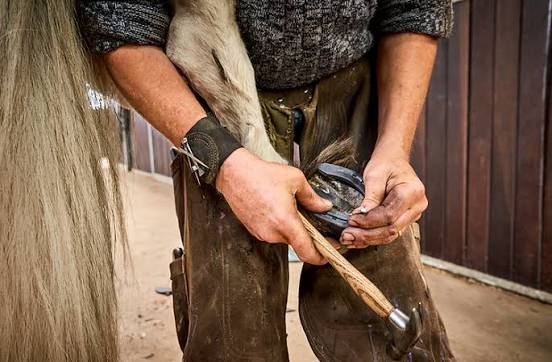
Farriery Techniques: Hot Shoeing vs. Cold Shoeing
When reading our horseshoe BLOG series on HOUFERS, horse owners frequently ask which shoeing technique is superior. The answer depends heavily on the horse’s workload, hoof wall integrity, and geographical terrain.
                          [ SHOEING METHODOLOGY COMPARISON ]
                                          |
         +--------------------------------+--------------------------------+
         |                                                                 |
[ HOT SHOEING (THERMAL FITTING) ]                                [ COLD SHOEING (COLD BENDING) ]
         |                                                                 |
• Steel heated in forge to ~1,800°F                              • Pre-shaped shoe adjusted manually
• Melts slight imperfections for flush contact                   • Quicker application without forge
• Kills surface bacteria/fungi instantly                         • Ideal for simple, routine maintenance
• Requires master farrier expertise                              • Best for horses sensitive to smoke
-
Hot Shoeing (Thermal Fitting): The farrier heats the steel shoe in a forge until it reaches a malleable orange heat (~1,800°F). The heated shoe is briefly applied directly to the pre-trimmed hoof wall. This burns away micro-imperfections, creates an airtight seal that deters bacteria, and ensures precise seating against the white line.
-
Cold Shoeing: The shoe is shaped manually at an anvil without heat. While quicker and requiring less specialized equipment, cold shoeing demands exceptional manual skill to achieve a perfect level fit without leaving microscopic gaps where moisture and grit can collect.
Preventative Hoof Care Protocols for Livestock Managers
To ensure optimal hoof health year-round, our horseshoe BLOG advocates for a strict preventative maintenance routine:
-
Daily Hoof Picking: Remove packed mud, manure, and stones before and after turnouts to prevent thrush (Fusobacterium necrophorum).
-
Moisture Management: Avoid constant alternating between muddy paddocks and bone-dry stalls, which leads to cracks and brittle wall separation.
-
Balanced Nutritional Diets: Ensure adequate dietary levels of biotin, zinc, methionine, and omega-3 fatty acids to support cellular keratin synthesis.
-
Regular Trimming Cycles: Maintain a strict 4 to 8-week farriery schedule regardless of whether the horse is shod or barefoot.
2. Fashion & Accessories The Equestrian Aesthetic & Leathercraft Revival
Beyond functional farm use, the iron shoe and its associated equestrian paraphernalia have exerted a profound influence on global fashion trends. From luxury European fashion houses to rugged Western outerwear, equestrian motifs reflect durability, prestige, and timeless craftsmanship.
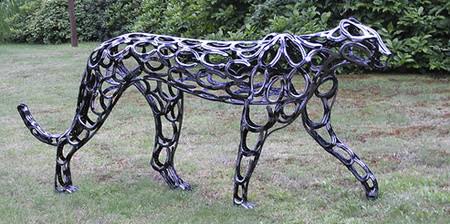
The Integration of Equestrian Motifs in High Fashion
On [suspicious link removed], our dedicated horseshoe BLOG stylistic section explores how traditional farriery items evolved into sartorial staples:
| Fashion Category | Historical Equestrian Origin | Modern Fashion Application |
| Footwear | Cavalry riding boots & working farrier boots | Chelsea boots, riding boots & leather loafers |
| Hardware Details | Brass/Iron horseshoe buckles & bit rings | Handbag closures, belt buckles & jewelry design |
| Outerwear | Waxed cotton field coats & tweed hacking jackets | Tailored blazers, weatherproof barn jackets |
| Leather Goods | Bridle leather, saddles, and saddlebag pouches | Full-grain leather totes, belts & wallets |
The Philosophy of Full-Grain Leather & Hardware Longevity
True equestrian style is rooted in uncompromising utility. Authentic equestrian accessories featured on HOUFERS prioritize full-grain vegetable-tanned leather. Unlike cheap bonded or corrected-grain leathers, full-grain leather retains the natural outer layer of the hide, granting it extraordinary tensile strength and allowing it to develop a rich, weathered patina over years of use.
Coupled with solid brass or stainless-steel horseshoe buckles, these accessories mirror the durability of actual farriery hardware—delivering products that withstand harsh rural conditions while looking sophisticated in urban settings.
3. European History & Culture The Origins, Mythos, and Symbolism of the Horseshoe
To truly appreciate the depth of our horseshoe BLOG content, one must travel back through European history. The invention of the nailed iron horseshoe was one of the most transformative technical innovations of classical antiquity and the Middle Ages.
                  [ HISTORICAL EVOLUTION OF EQUINE FOOTWEAR ]
                                       |
       +-------------------------------+-------------------------------+
       |                                                               |
[ ROMAN HIPPOCUPBOARD (HIPPOCANDLE) ]                       [ MEDIEVAL NAILED IRON SHOE ]
       |                                                               |
• Strapped-on leather & bronze shoes                         • Perfected across Northern Europe (c. 9th Century)
• Temporary protection for paved roads                       • Permanent nail attachment through insensate wall
• Bulky, prone to slipping in heavy mud                      • Enabled heavy cavalry movement & year-round trade
Archaeological Journey From Roman Hipposandals to Medieval Metallurgy
Before the widespread adoption of nailed iron shoes, the Romans utilized the Hipposandal—a removable device made of leather, iron, or bronze tied onto the horse’s foot with leather thongs. While effective for short walks on paved Roman roads, hipposandals were easily lost in deep mud and provided inadequate protection for heavy agricultural labor.
By the 9th to 10th centuries, Celtic and Germanic tribes across Western Europe perfected the technique of driving iron nails through the non-sensitive outer margin of the hoof wall (the white line). This breakthrough allowed horses to traverse wet, rocky European soils without splitting their hooves, directly fueling the expansion of heavy knight cavalry, efficient field plowing, and long-distance trade networks.
The Folklore of Iron Saint Dunstan and the Good Luck Symbol
Why is the horseshoe considered a universal talisman against evil across European folklore? Our horseshoe BLOG historical archives point to two main cultural pillars:
                      [ DUAL PILLARS OF HORSESHOE FOLKLORE ]
                                         |
       +---------------------------------+---------------------------------+
       |                                                                   |
[ THE METALLURGY OF ELEMENTAL IRON ]                     [ THE LEGEND OF SAINT DUNSTAN (10TH C.) ]
       |                                                                   |
• Iron believed to repel malignant spirits               • Dunstan, a blacksmith, shoed the Devil's hoof
• Forged by fire, combining earth, air & water           • Released the Devil only after a solemn oath:
• Symbolized dominion over primordial nature              • Never enter a door bearing a horseshoe above it
-
The Sacred Powers of Iron: In ancient Celtic and Germanic mythologies, iron was considered a sacred, magical metal capable of warding off mischievous spirits, witches, and goblins. Blacksmiths were viewed as shamanic artisans who manipulated elemental fire, earth, and air to forge protective tools.
-
The Legend of Saint Dunstan: According to 10th-century English legend, Dunstan—a skilled blacksmith who later became the Archbishop of Canterbury—was asked by the Devil to shoe his cloven hoof. Dunstan cunningly chained the Devil to his anvil and hammered a red-hot iron shoe deep into his hoof, causing excruciating pain. Dunstan agreed to release the Devil only on the condition that he would never enter a building displaying a horseshoe hanging over the doorway.
Proper Orientation: Upward vs. Downward Display
A common debate addressed across our horseshoe BLOG articles on [suspicious link removed] is the orientation for hanging a horseshoe:
Hanging Upward (“U” Shape): Traditional Anglo-Saxon and Western European belief dictates hanging the shoe with the heels pointing UP. This forms a cup that collects and holds good fortune, preventing luck from spilling out.
Hanging Downward: In certain Mediterranean, blacksmithing, and regional European traditions, hanging the shoe with heels pointing DOWN allows blessings and luck to shower down upon everyone who walks through the threshold.
4. Equestrian Tourism & Cultural Expeditions Across Europe
For equestrian enthusiasts, nothing compares to exploring Europe’s historic landscapes from the saddle. In this section of our horseshoe BLOG, we showcase remarkable destinations where equine tradition, breathtaking geography, and regional culture intertwine.
Top European Equestrian Destinations
                 [ EUROPEAN EQUESTRIAN HERITAGE TRAILS ]
                                    |
       +----------------------------+----------------------------+
       |                                                         |
[ THE CAMARGUE MARSHES (FRANCE) ]                        [ ANDALUSIA & JEREZ (SPAIN) ]
       |                                                         |
• Ride iconic wild white Camargue horses                  • Home of the Pure Spanish Horse (PRE)
• Navigate coastal wetlands & salt flats                 • Classical dressage schools & historic stud farms
• Experience traditional Gardian cattle herding           • Historic countryside hacienda trail rides
1. The Camargue Delta, France
Located in southern France, the Camargue is home to one of the world’s oldest horse breeds—the white Camargue horse. Here, travelers can ride alongside traditional Gardians (French cowboys) as they herd black Camargue bulls through vast coastal wetlands, salt marshes, and pristine Mediterranean beaches.
2. Andalusia & Jerez de la Frontera, Spain
Andalusia is the heartland of the Pure Spanish Horse (Pura Raza Española – PRE). Visitors can embark on equestrian tours through rolling olive groves and white-washed villages (Pueblos Blancos), culminating in visits to the Royal Andalusian School of Equestrian Art in Jerez to witness classical high-school dressage demonstrations.
3. The Connemara Loop, Ireland
Traverse the rugged, peat-rich landscapes of Western Ireland on a sure-footed Connemara Pony. This trail guides riders along rocky Atlantic coastal cliffs, ancient Celtic ruins, and cozy rural pubs where farriery and equine storytelling remain vibrant parts of community life.
4. The Tuscan Countryside, Italy
Experience slow travel by riding through Tuscany’s historic vineyards, cypress-lined avenues, and medieval hill towns. Riders can stop at local family estates to sample chianti wines and artisan cheeses before continuing along ancient Etruscan trails.
5. Comparative Analysis Farriery Traditions Around the World
To round out our horseshoe BLOG coverage on HOUFERS, let us examine how farriery techniques and hoof management vary across different continents based on climate, terrain, and cultural working demands:
| Region / System | Primary Materials Used | Typical Terrain Application | Distinctive Structural Features |
| Western European Standard | Mild Steel, Synthetic Polyurethane | Mixed pasture, paved roads, wet soils | Fullered crease, toe clips, rolled toes for smooth turnover |
| North American Ranch Style | Heavy-duty Steel, Aluminum | Rocky mountain trails, arid desert clay | Sturdier branch width, extended heel support for roping |
| Traditional Asian (Inner Asia) | Hand-hammered Raw Iron | Steppe grasslands, rocky gravel paths | Thinner profile, minimalist nail holes to preserve thin walls |
| Modern Therapeutic Farriery | Aircraft-Grade Aluminum, Composite Rubber | Arena footing, rehabilitation clinics | Wedge pads, heart-bar support, glue-on acrylic attachments |
6. How to Care for Authentic Horseshoe Heritage Collectibles
Many readers of our horseshoe BLOG on [suspicious link removed] collect antique, hand-forged iron shoes to display as rustic home decor or luck talismans. Restoring and preserving historic ironware requires careful attention to prevent rust and degradation:
                    [ PRESERVATION & RESTORATION STEPS ]
                                     |
       +-----------------------------+-----------------------------+
       |                                                           |
[ DE-RUSTING & CLEANING ]                                 [ SEALING & FINISHING ]
       |                                                           |
• Wire-brushing or mechanical sanding                     • Thorough drying using heat gun or sunlight
• Soaking in mild acetic acid / vinegar bath              • Application of natural beeswax or boiled linseed oil
• Neutralizing with baking soda solution                  • Hand-buffing to produce a rich matte sheen
-
Mechanical De-rusting: Gently brush away loose dirt, flaking rust, and debris using a stiff brass or steel wire brush. Avoid harsh chemical strip baths that alter the original hand-forged hammer marks.
-
Chemical Neutralization: For stubborn oxidation, soak the iron shoe in a mild bath of white vinegar or chelating rust-remover solution for 12–24 hours. Once rust dissolves, rinse thoroughly in water mixed with baking soda to neutralize residual acids.
-
Drying & Thermal Waxing: Ensure the shoe is 100% dry by warming it gently with a heat gun or in an oven at 200°F (93°C). While the iron is still warm, coat the surface with natural beeswax or boiled linseed oil. The melted wax penetrates deep into the porous iron, creating a durable, water-resistant seal that produces a rich dark finish.
Frequently Asked Questions (FAQ)
Does shoeing hurt the horse?
No. When performed by a qualified farrier, shoeing is completely painless. The nails are driven precisely through the outer, keratinized layer of the hoof wall (the white line), which lacks nerve endings or blood vessels—much like trimming a human fingernail.
How often should horses have their shoes replaced?
On average, horses require farriery maintenance every 4 to 8 weeks. Even if the metal shoes show minimal wear, the hoof wall continues to grow beneath them, altering the foot angle and placing strain on joints and tendons if left untrimmed.
Why do some horses go barefoot while others require shoes?
Barefoot management works exceptionally well for horses with naturally strong, thick hoof walls exercising on forgiving surfaces like turf or sand arenas. However, horses working on hard, abrasive surfaces (pavement, gravel trails) or those recovering from pathological conditions (laminitis, navicular disease) require shoes for structural protection, traction, and therapeutic correction.
Conclusion Embrace the Equestrian Lifestyle with HOUFERS
The universe of the horseshoe is vast, uniting animal welfare, biomechanical science, fine leatherworking, ancient mythology, and unforgettable European travel adventures. Through this dedicated horseshoe BLOG, [suspicious link removed] remains committed to serving as your definitive source for expert-backed insights, practical husbandry advice, and cultural exploration.
We invite you to bookmark HOUFERS, share this guide with fellow equestrians and history enthusiasts, and explore our ongoing article series covering rural lifestyle traditions from around the globe.